
Why Is There a Gap Between My Shower Door and the Wall?
The gap is on purpose: a glass door needs room to swing without hitting the wall. A seal is what makes it watertight.
Why the gap is there
Glass can't touch the wall or the panel it closes against, or it would bind and could chip. Installers leave a small gap at the hinge side and the latch side, and a seal closes it.
Which seal closes your gap
| Situation | Seal |
|---|---|
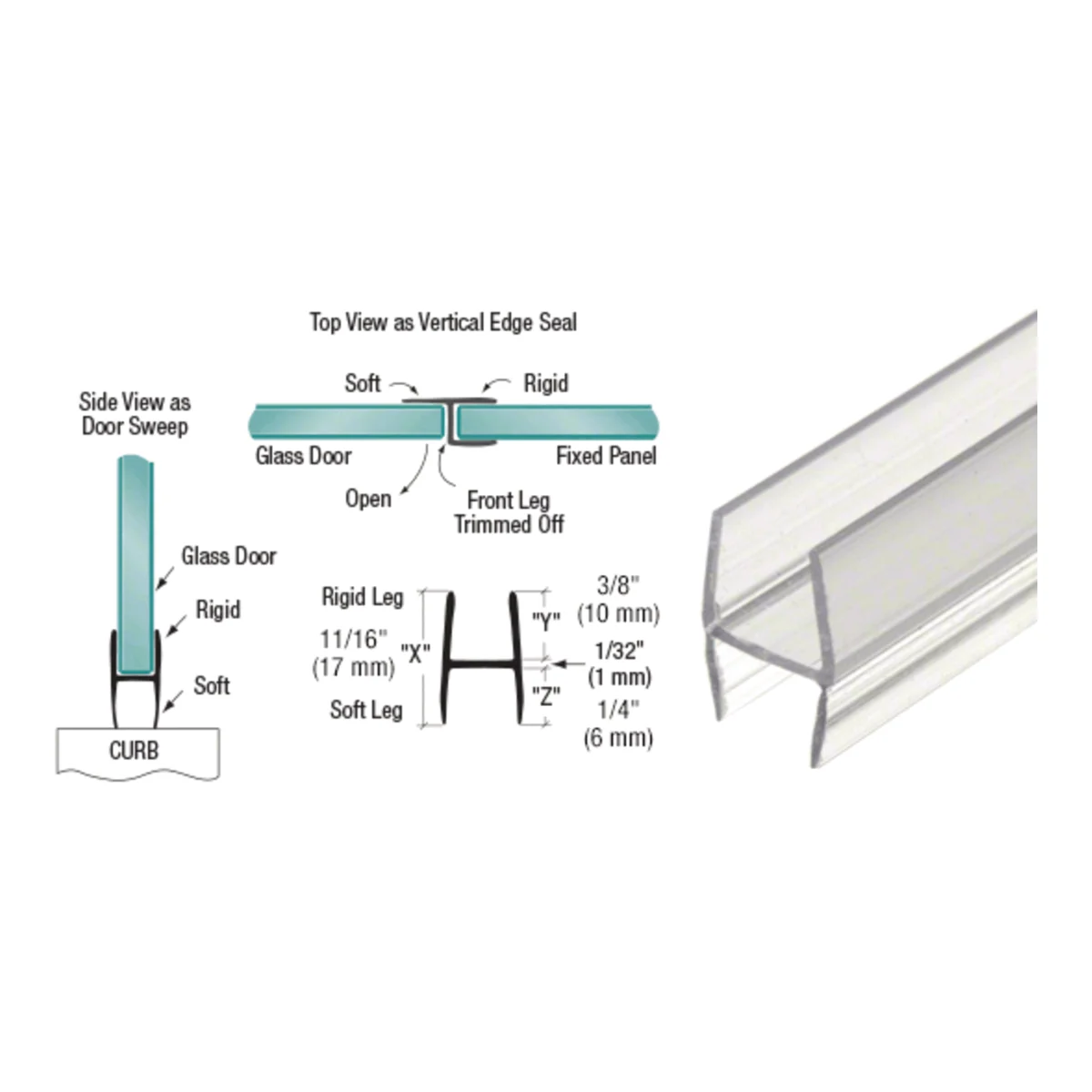
| Door edge against a wall | An 'H' wipe on the door edge, like CRL P375HW (3/8" glass) |
| Small, even gap; tape-on | A V seal like CRL SDTS (3/16"–1/4" gap) |
| Larger gap on an outswing door | An L seal like CRL SDTL (up to 3/8") |
| Uneven gap | A soft bulb seal like CRL SDTB |
When the gap is too big
If the gap is wider at the top than the bottom, or has grown over time, the door may be sagging or a hinge may need adjusting. A seal will help, but adjusting the door is the real fix.
Measure the gap with the door closed at the top, middle and bottom, and choose the seal for the largest measurement.
Use our Seal Finder
Pick your door, point to where it leaks and we'll show only the seals that fit your glass. Takes about 30 seconds.
Products in this guide
 Most common
Multi-Purpose 'H' Wipe for 3/8" Glass
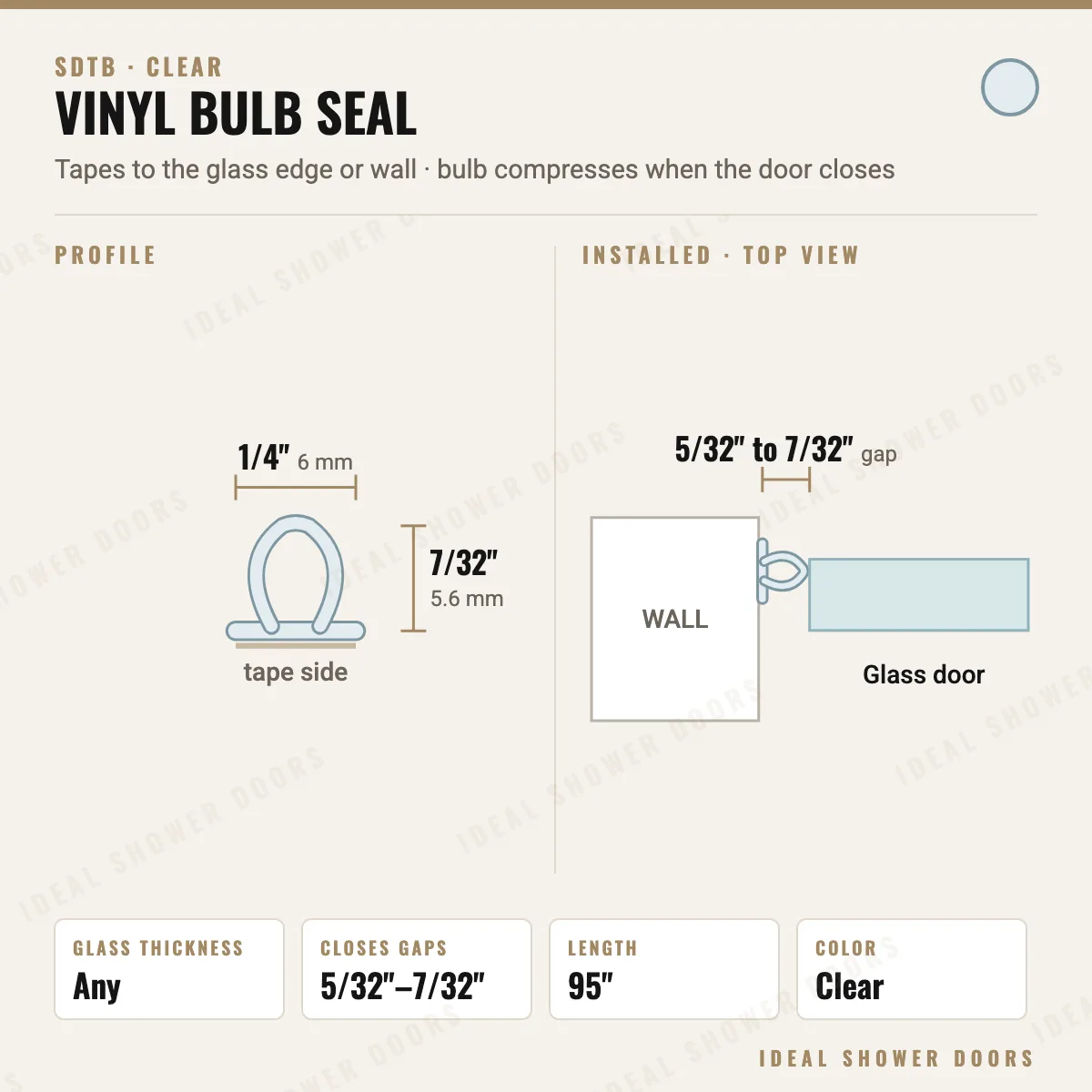
Clear Vinyl Bulb Seal, 5/32" to 7/32" Gap
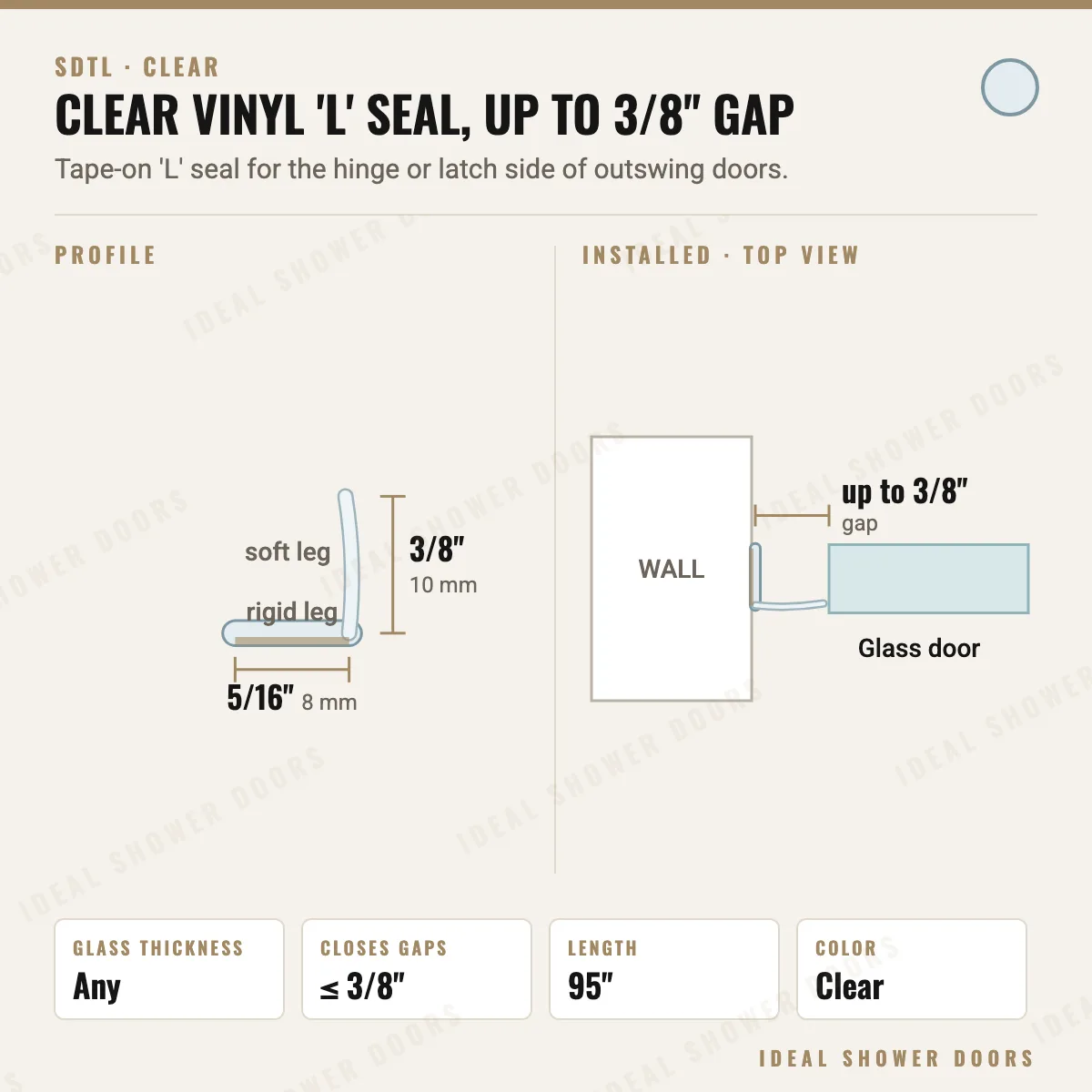
Clear Vinyl 'L' Seal, up to 3/8" Gap
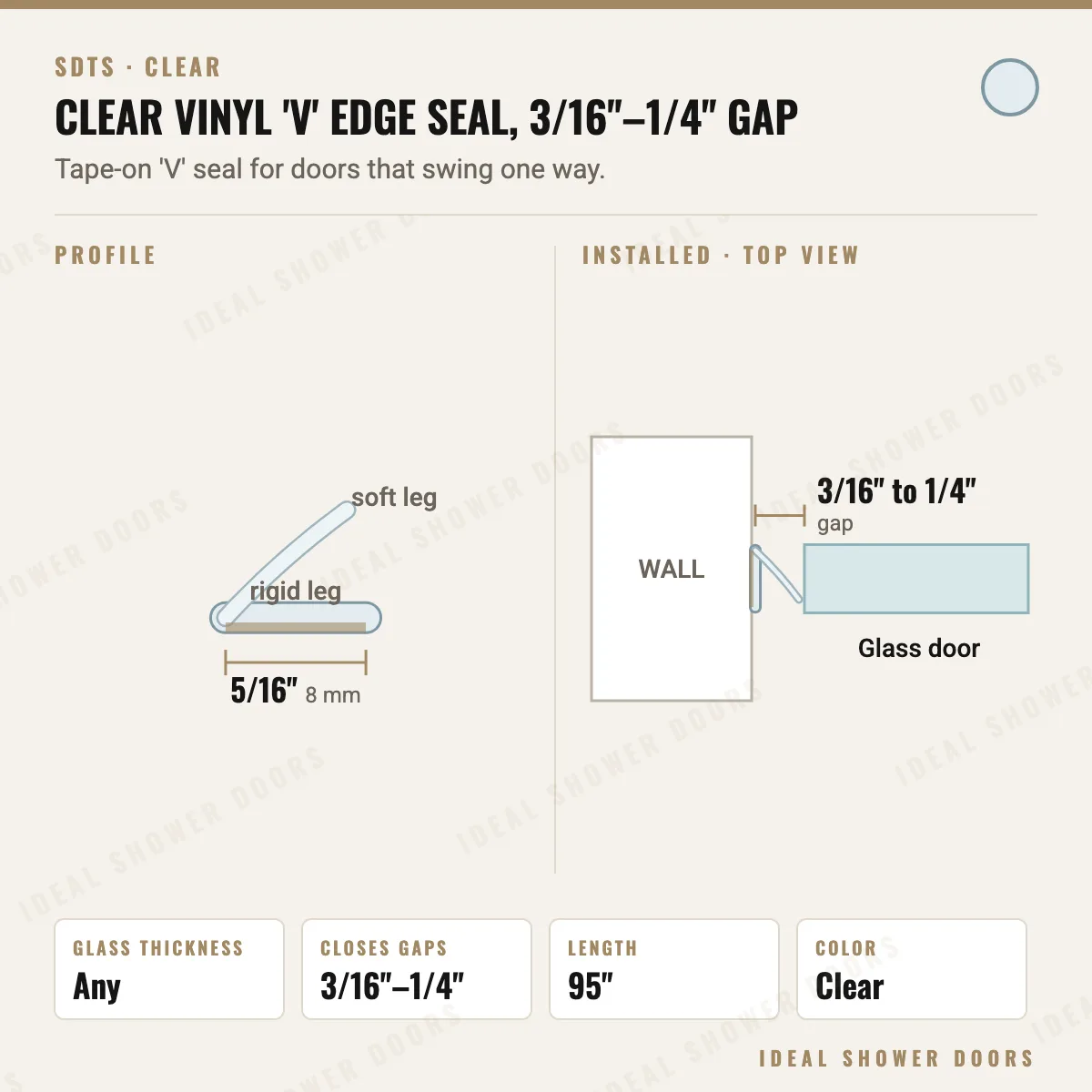
Clear Vinyl 'V' Edge Seal, 3/16"–1/4" Gap
Common questions
Is it normal to have a gap between a glass shower door and the wall?
Yes. The door needs a small gap to swing freely. A seal closes it so water stays in.
How do I close the gap between my shower door and the wall?
Add a seal sized for the gap: an 'H' wipe on the door edge, or a tape-on bulb, L or V seal on the wall or glass edge.