
Hard Water by State: What It Means for Your Shower Glass and Seals
Tap water is hardest across the Southwest and the Great Plains (Arizona, Nevada, Utah, New Mexico, Texas, Kansas, Nebraska, the Dakotas, Iowa, Minnesota and Florida) and softest in New England, the Pacific Northwest and much of the Southeast. The harder your water, the faster spots build up on shower glass and the faster minerals stiffen and wear out door seals.
Hard water by state
Typical public-water hardness. Your town can differ: check your utility's annual water quality report.
| Typical hardness | States |
|---|---|
| Very hard over 180 mg/L | Arizona, Florida, Indiana, Iowa, Kansas, Minnesota, Nebraska, Nevada, New Mexico, North Dakota, South Dakota, Texas, Utah, Wisconsin |
| Hard 121–180 mg/L | California, Colorado, Idaho, Illinois, Kentucky, Michigan, Missouri, Montana, Ohio, Oklahoma, Pennsylvania, Wyoming |
| Moderately hard 61–120 mg/L | Alabama, Arkansas, Delaware, Hawaii, Louisiana, Maryland, New Jersey, New York, Tennessee, Virginia, Washington, DC, West Virginia |
| Soft under 60 mg/L | Alaska, Connecticut, Georgia, Maine, Massachusetts, Mississippi, New Hampshire, North Carolina, Oregon, Rhode Island, South Carolina, Vermont, Washington |
Hardness is the amount of dissolved calcium and magnesium in water. The U.S. Geological Survey (USGS) rates it as soft (0 to 60 mg/L as calcium carbonate), moderately hard (61 to 120), hard (121 to 180) and very hard (over 180). The map shows the typical level for each state's public water. Hardness changes from town to town, and private wells can be much harder than city water nearby, so treat your state as a starting point. Your water utility's annual water quality report (often called a Consumer Confidence Report) lists your actual number, and inexpensive test strips work too.
What hard water does to a glass shower
- Spots and haze on the glass. When drops dry, the water leaves its minerals behind as white spots. In very hard water areas that can happen in days; over months the spots overlap into a cloudy haze and can eventually etch the glass.
- Stiffer, shorter-lived seals. Minerals build up on vinyl wipes and sweeps, making them stiff so they stop sealing against the curb or wall. In hard water, expect to replace a bottom sweep sooner, often every 1 to 2 years.
- Buildup on hardware. Hinges, handles and clamps collect a crusty film around the edges where water sits.
How to care for your shower by water type
| Your water | What we suggest |
|---|---|
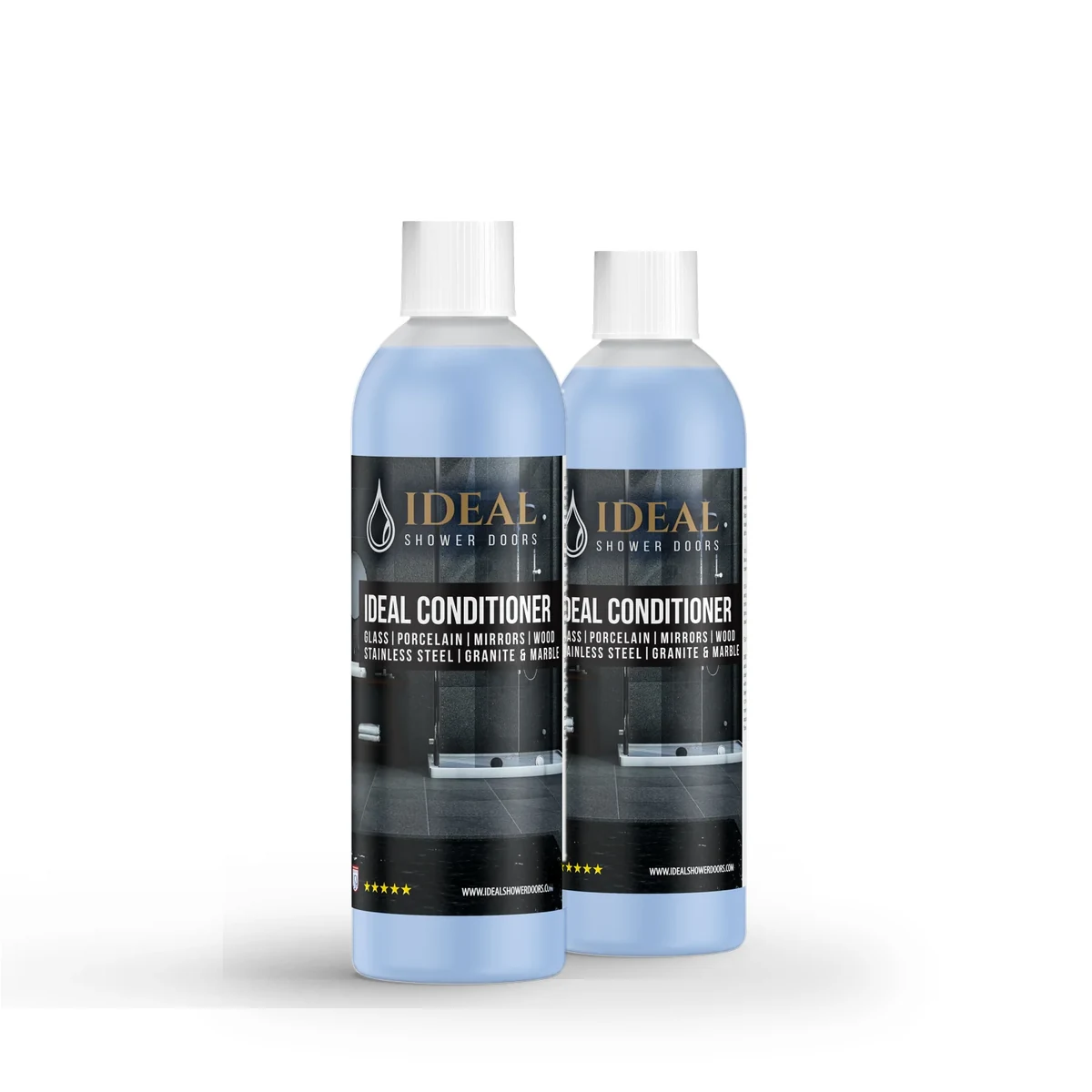
| Very hard | Seal the glass with a water-repellent coating, squeegee after every shower, and give the glass a quick pass with IDEAL Conditioner a few times a week. Check the bottom sweep each year. |
| Hard | Seal the glass, squeegee after showers, and use Conditioner weekly. Remove any buildup as soon as you see it, before it etches. |
| Moderately hard | Squeegee after showers and use Conditioner weekly. Reseal the glass about once a year. |
| Soft | Spots are slower to form, but soap scum still builds up. A squeegee and a weekly wipe keep the glass clear. |
If the glass is already spotted, a dedicated hard-water remover lifts the minerals before you seal it: see how to remove hard water spots from shower glass. We don't use or recommend vinegar or other acidic cleaners on shower glass, hardware or seals.
What we use
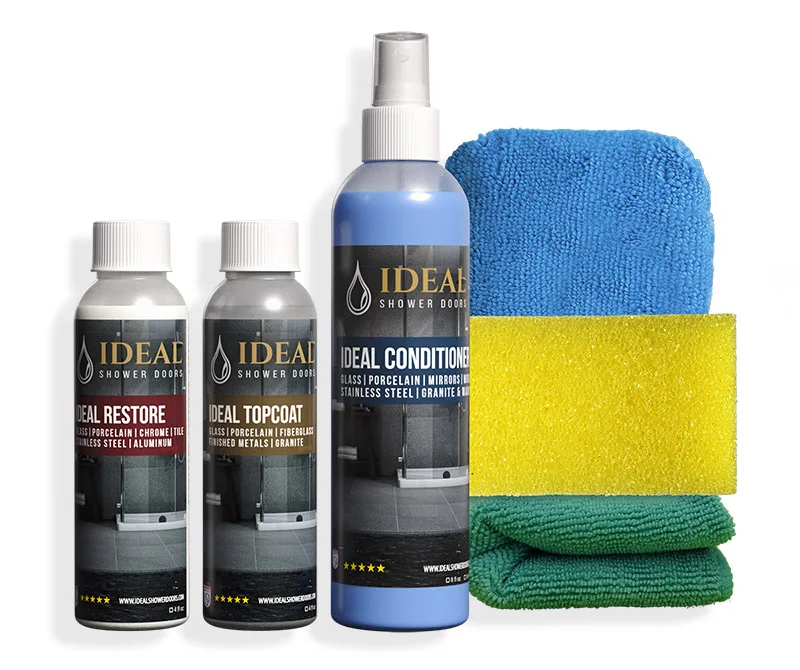
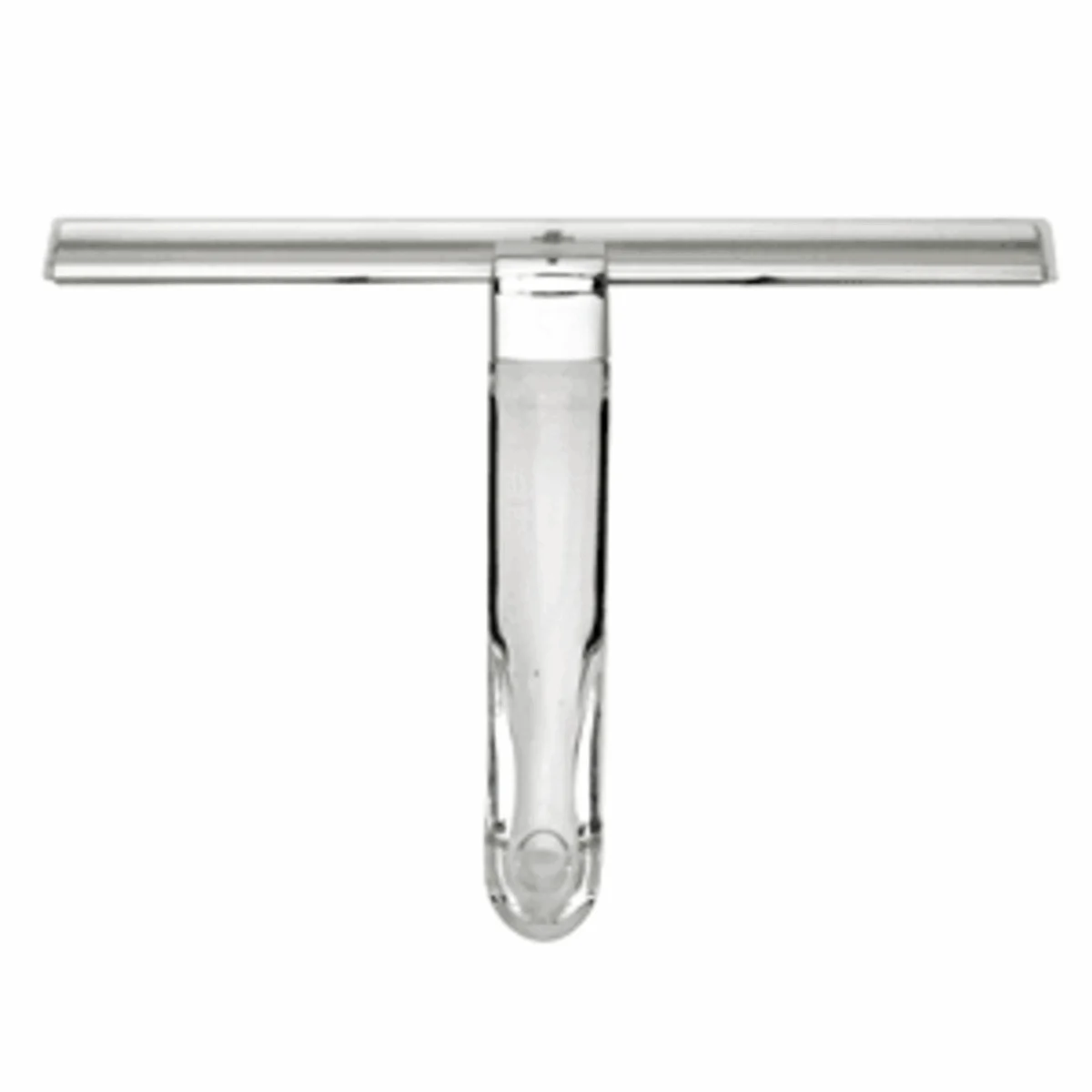
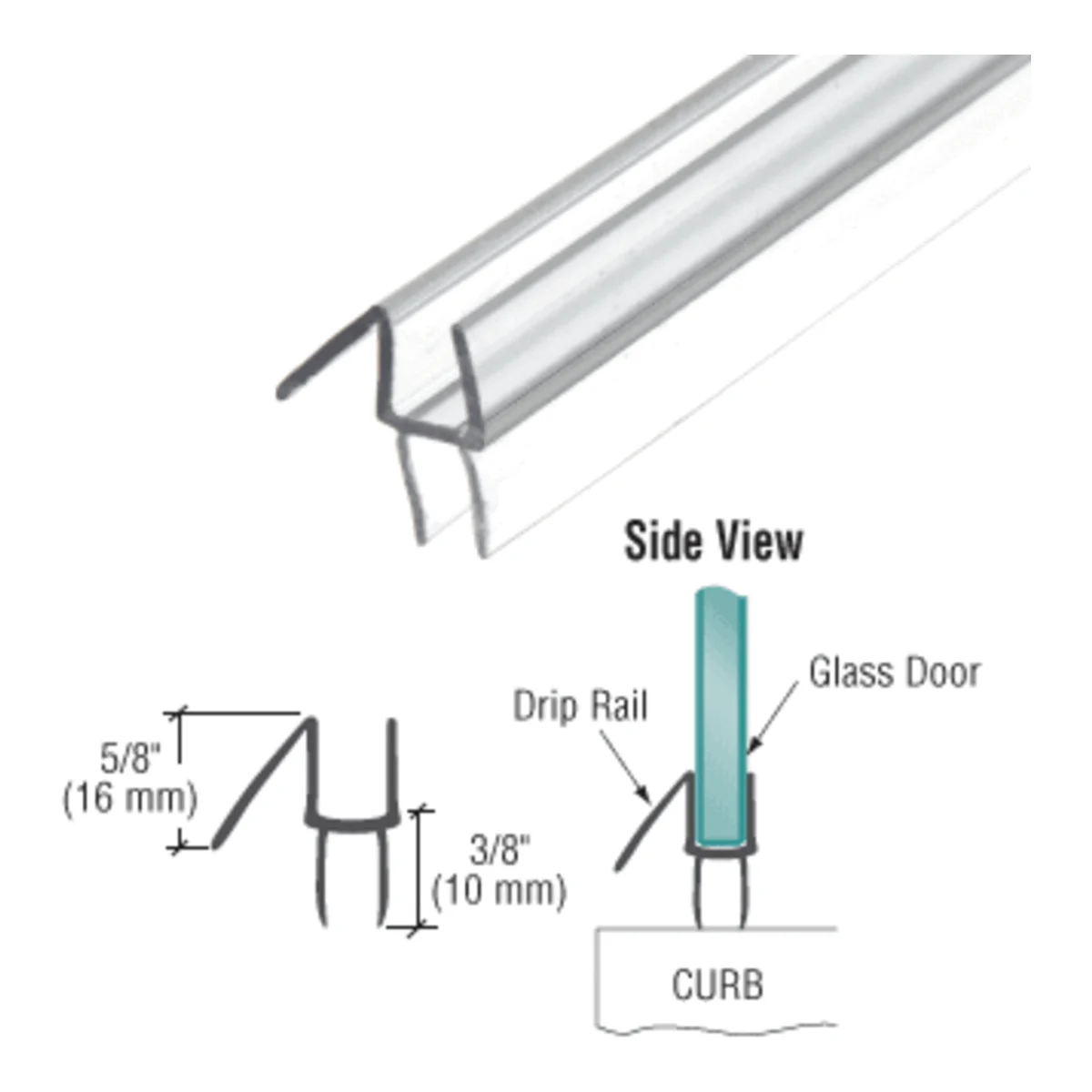
We use the IDEAL Bath Kit: Restore lifts water spots and haze, TopCoat seals the glass with a water-repellent coating, and Conditioner keeps it clear between cleanings. A squeegee after every shower does the rest. When a sweep stiffens up, replace it: for 3/8" glass that's usually the CRL P990WS bottom wipe with drip rail.
Products in this guide
Common questions
Which states have the hardest water?
Water is typically hardest in the Southwest and the Great Plains: Arizona, Nevada, Utah, New Mexico, Texas, Kansas, Nebraska, North and South Dakota, Iowa and Minnesota, plus Indiana, Wisconsin and much of Florida. Hardness varies by town, so check your local water report.
Which states have the softest water?
New England (Maine, New Hampshire, Vermont, Massachusetts, Rhode Island, Connecticut), western Washington and Oregon, and much of the Southeast (Georgia, the Carolinas, Mississippi) typically have soft water.
How do I find out how hard my water is?
Your water utility publishes an annual water quality report (a Consumer Confidence Report) that lists hardness. You can also use inexpensive water hardness test strips. Private wells should be tested on their own.
Does hard water ruin shower door seals?
It shortens their life. Minerals build up on vinyl wipes and sweeps and stiffen them, so they stop sealing. In hard water areas, plan on replacing the bottom sweep more often, and keep the glass sealed and squeegeed.