
How to Clean a Glass Shower Door (and Keep It Clean)
Three habits keep a glass shower door clear: a squeegee after every shower, a weekly spray-and-buff with a soapless glass conditioner, and restoring and sealing the glass when spots build up.
The routine
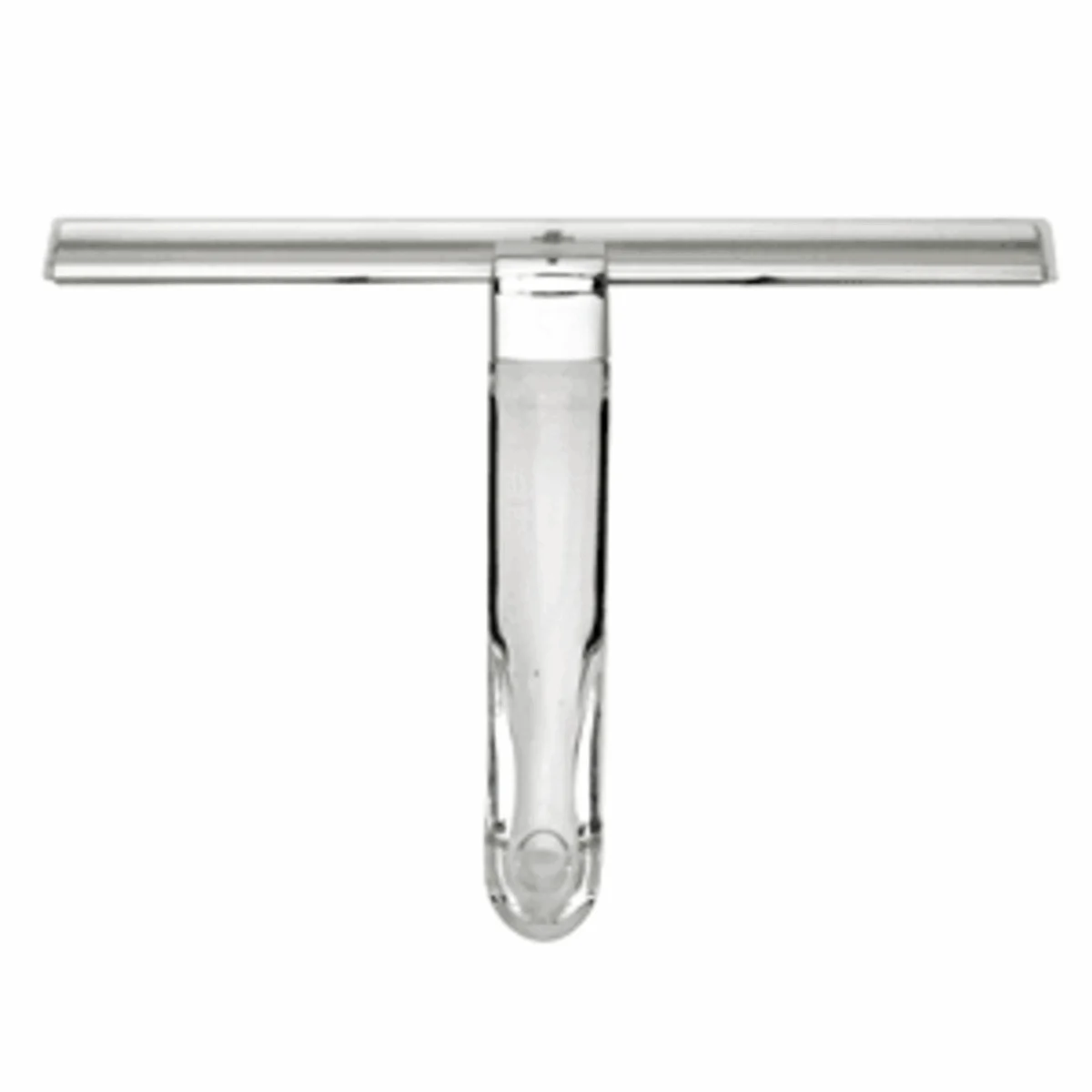
- Squeegee after every shower. Run a squeegee down the glass, top to bottom, while it is still wet. It takes 30 seconds and stops hard water spots and soap scum before they start.
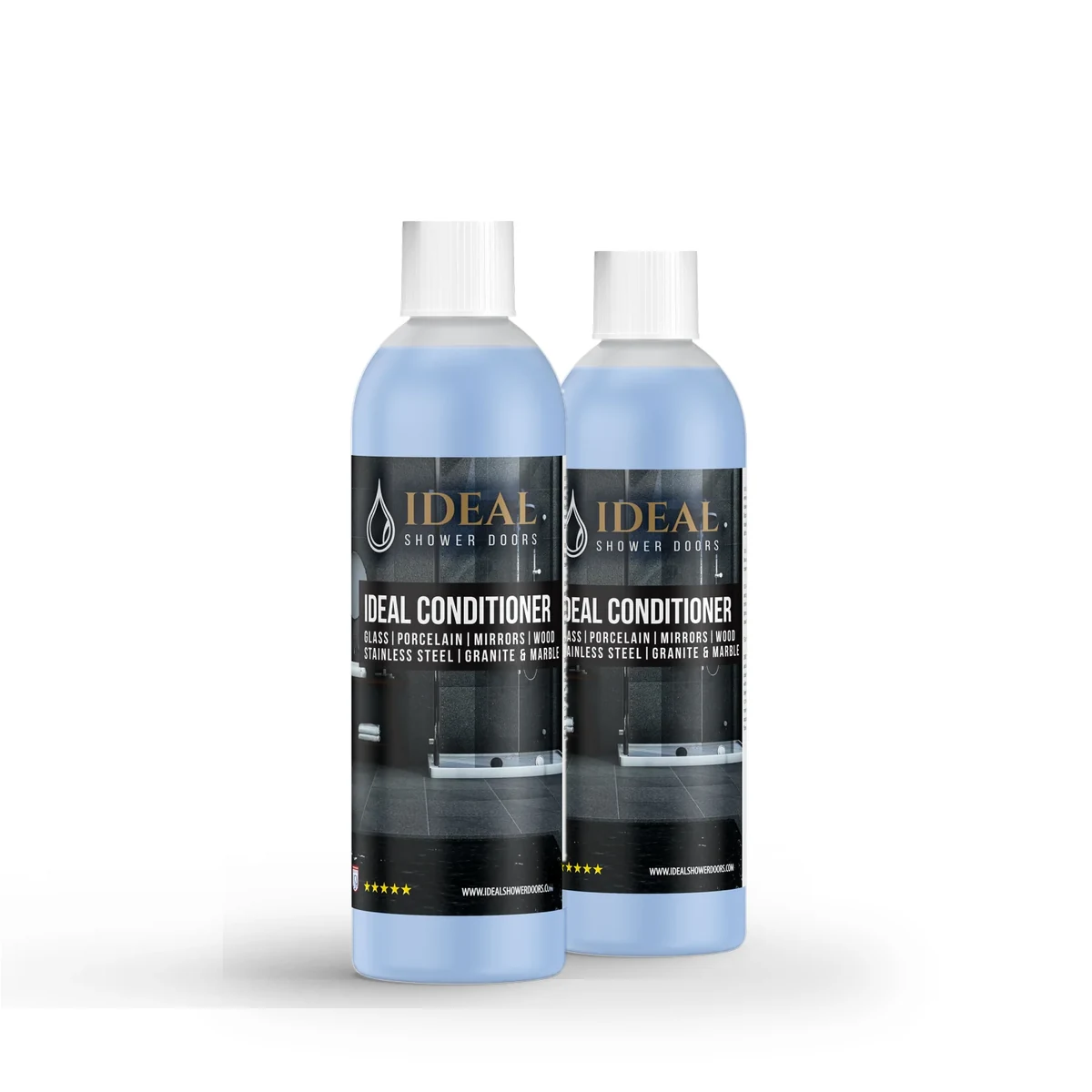
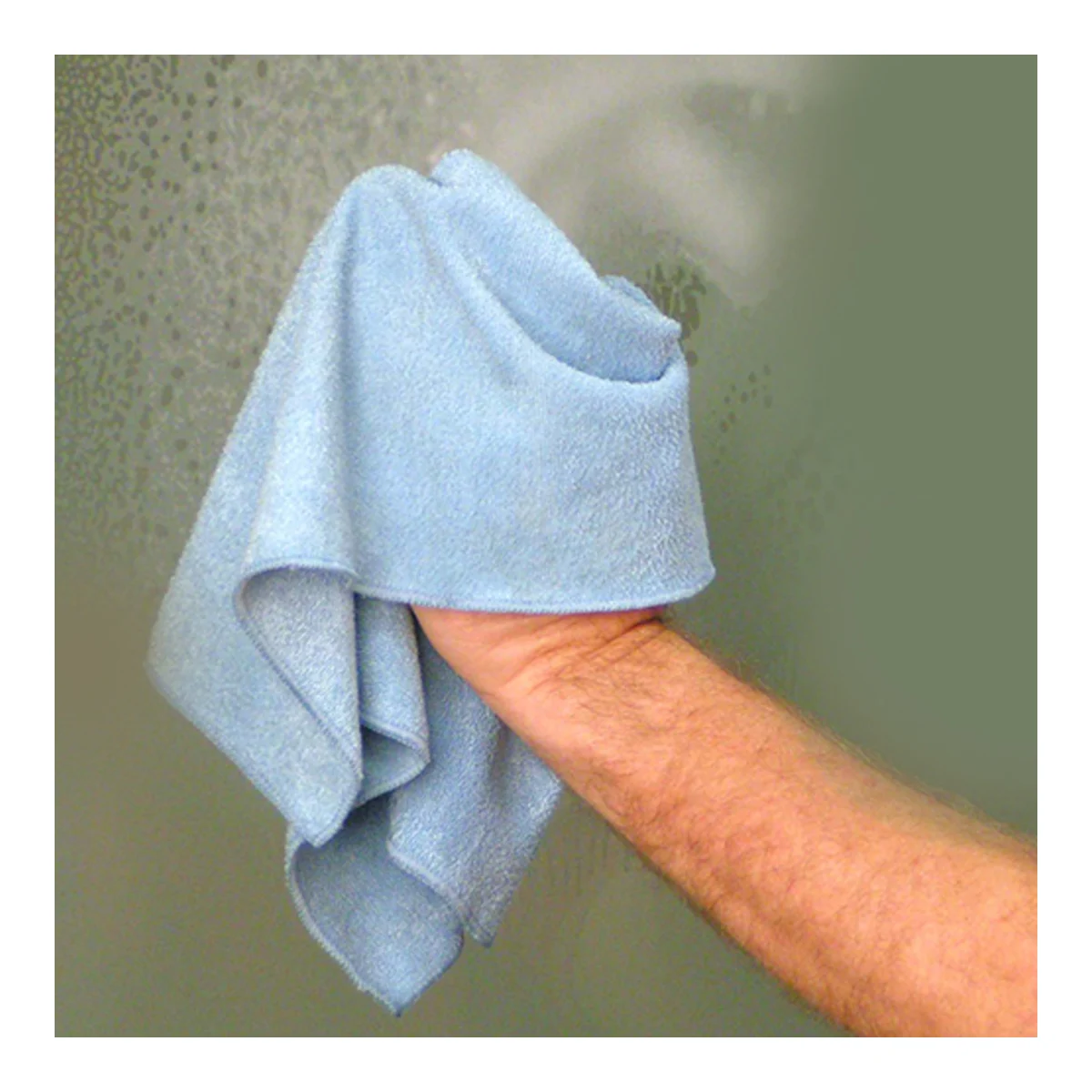
- Spray and buff once a week. Mist IDEAL Conditioner on the dry glass and buff it with a clean microfiber cloth like the CRL MFW12. It is soapless, cleans and polishes in one pass, and leaves a water-repellent, streak-free shine so water beads and runs off. Whatever you use, skip ammonia: it can damage protective glass coatings and leaves streaks.
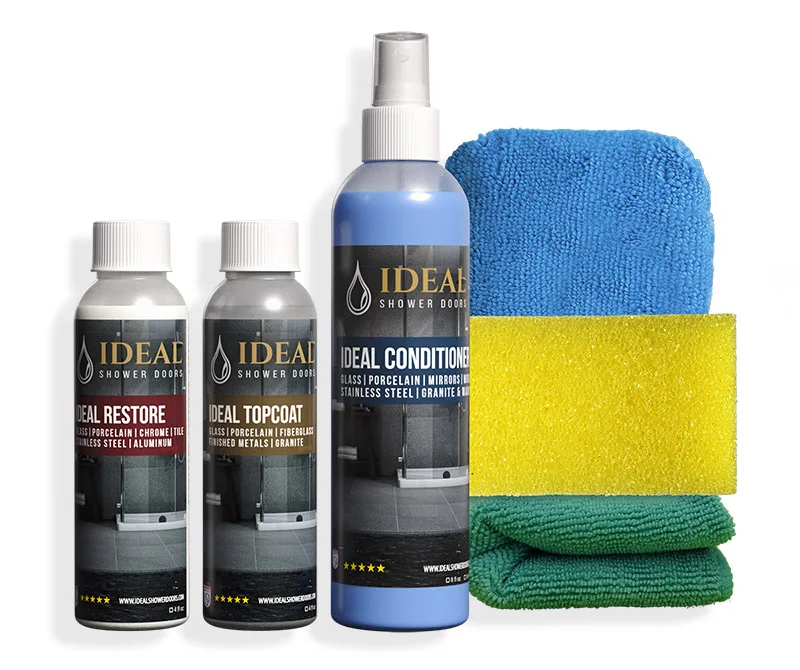
- Restore spotted or hazy glass. A weekly wipe won't lift built-up hard water spots, because they are minerals, not dirt. The IDEAL Bath Kit handles it in three steps: Restore lifts the spots, haze and corrosion, TopCoat seals the glass with a water-repellent protective coating, and Conditioner buffs it clear. Skip vinegar and other acidic cleaners: we don't use or recommend them on shower glass, hardware or seals.
- Wipe the seals and hardware. Clean seals, hinges and handles with mild soap and water and a soft cloth. Skip abrasive pads, bleach and harsh chemicals: they cloud vinyl seals and dull the hardware finish.
- Dry and ventilate. Leave the door open or run the fan after showering so the seals and corners dry out. Moisture is what lets mildew grow.
What not to use
- Ammonia-based glass cleaners. They can damage protective coatings on shower glass and leave a streaky film.
- Abrasive pads or scouring powder. They scratch glass and cloud vinyl seals.
- Paper towels. They leave lint; use microfiber or lint-free wipes.
- Vinegar and other acidic cleaners. We don't use or recommend acidic cleaners like vinegar, lemon juice or lime and calcium removers on shower glass, hardware or seals. Acids can be hard on metal finishes, natural stone and grout around the glass, and a product made for glass, like the IDEAL Bath Kit, does the job without them.
When cleaning isn't enough
If the haze stays after a proper hard-water treatment, the glass may be etched, which cleaning can't fix; sealing it helps keep it from getting worse (see why shower glass looks cloudy). And if the seals stay yellow, black or stiff after cleaning, it is time to replace them.
Everything we use on shower glass, the IDEAL Bath Kit and the IDEAL Conditioner 2-Pack, is on our Glass Care page, and both ship free from IDEAL.
Products in this guide
Common questions
What is the best way to clean a glass shower door?
Squeegee it after every shower, and once a week spray and buff it with a soapless glass conditioner like IDEAL Conditioner and a microfiber cloth. If hard water spots have built up, restore and seal the glass with the IDEAL Bath Kit.
Why should I use an ammonia-free glass cleaner on a shower door?
Ammonia can damage the protective coatings many shower doors have and tends to leave streaks. An ammonia-free cleaner like CRL S50 cleans without leaving a film.
How do I remove hard water spots from shower glass?
Use a hard-water remover made for glass, like IDEAL Restore, the first step of the IDEAL Bath Kit, then seal the glass with its TopCoat so new spots have less to grab onto. It removes mineral deposits but cannot fix glass that is already etched.
Can I use IDEAL Conditioner on my shower door every week?
Yes. That is what it is for: mist it on dry glass and buff with a microfiber cloth. It cleans and polishes in one pass and leaves a water-repellent shine. It won't remove heavy hard-water haze, though; for that, start with the IDEAL Bath Kit.
Should I squeegee my shower door every day?
Yes. Squeegeeing after every shower is the single best way to prevent hard water spots and soap scum.