
How to Remove Hard Water Spots from Shower Glass
To remove hard water spots from shower glass, lift the mineral deposits with a dedicated hard-water remover, rinse and dry the glass, then seal it with a water-repellent protective coating so new spots have less to grab onto. Regular glass cleaner alone won't do it, because the spots are minerals, not dirt.
What hard water spots actually are
Hard water carries dissolved minerals, mostly calcium and magnesium. When drops dry on the glass, the water evaporates and the minerals stay behind as white spots. Over time those spots overlap into a cloudy haze, and soap scum (soap mixed with body oils) builds on top of them. That is why ordinary glass cleaner wipes off the grime but leaves the white film: it isn't made to lift minerals.
How to remove them, step by step
- Start with clean, dry glass. Rinse the glass and wipe off loose soap and grime so the remover works on the mineral spots themselves.
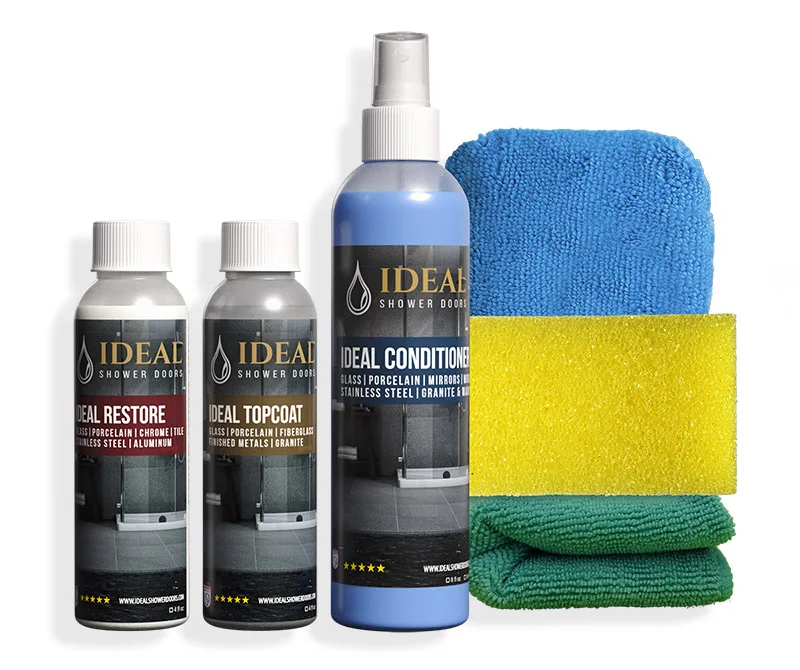
- Work in a hard-water remover. Apply a remover made for mineral deposits, such as IDEAL Restore, with an applicator pad. Work in small sections with gentle, overlapping circles, paying extra attention to the bottom of the door, where water sits longest.
- Rinse and check. Rinse well and dry the glass, then look at it in good light. Heavily spotted areas may need a second pass.
- Seal the glass. Once the glass is clear, apply a protective coating like IDEAL TopCoat in two thin coats. Sealed glass sheds water instead of holding it, so fewer spots form.
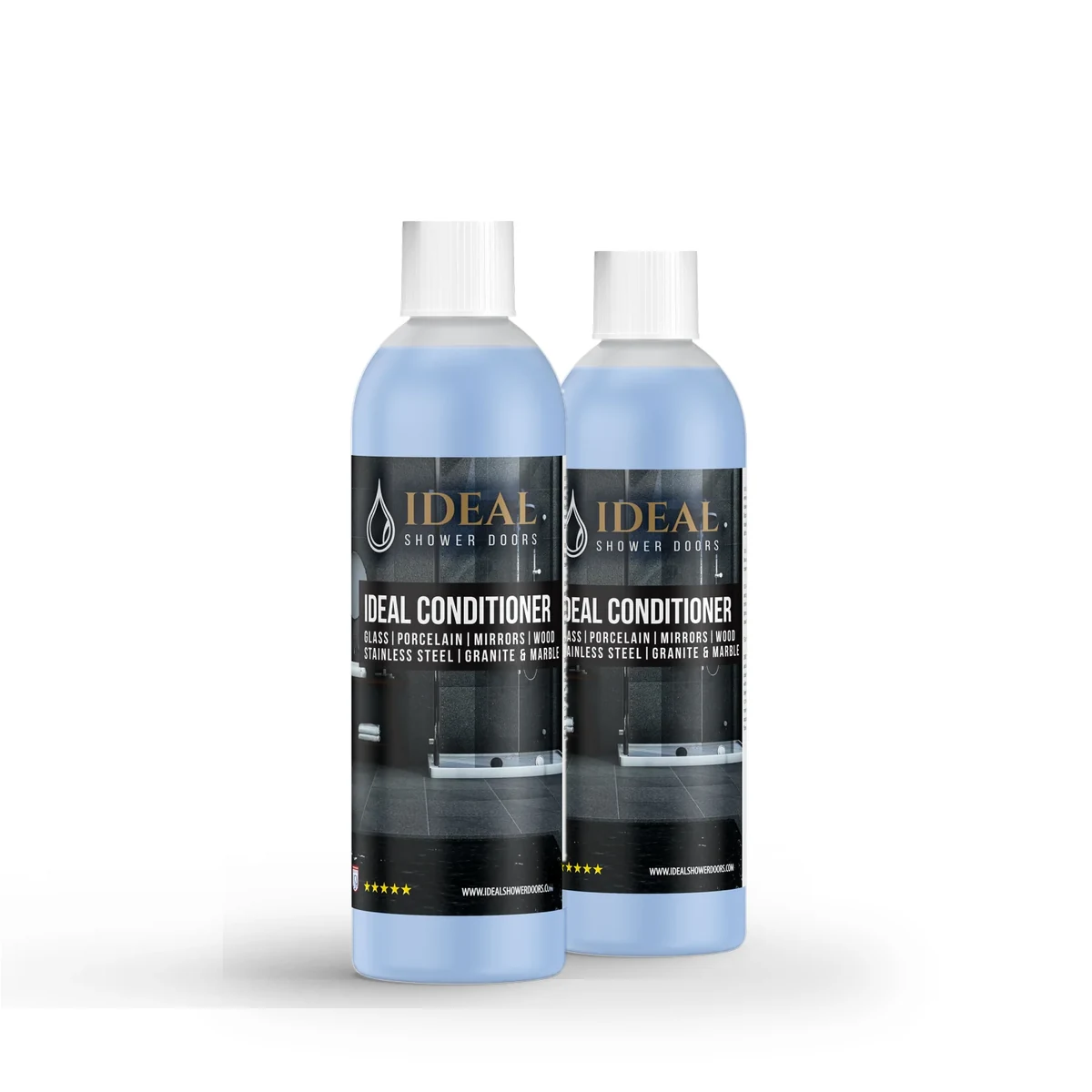
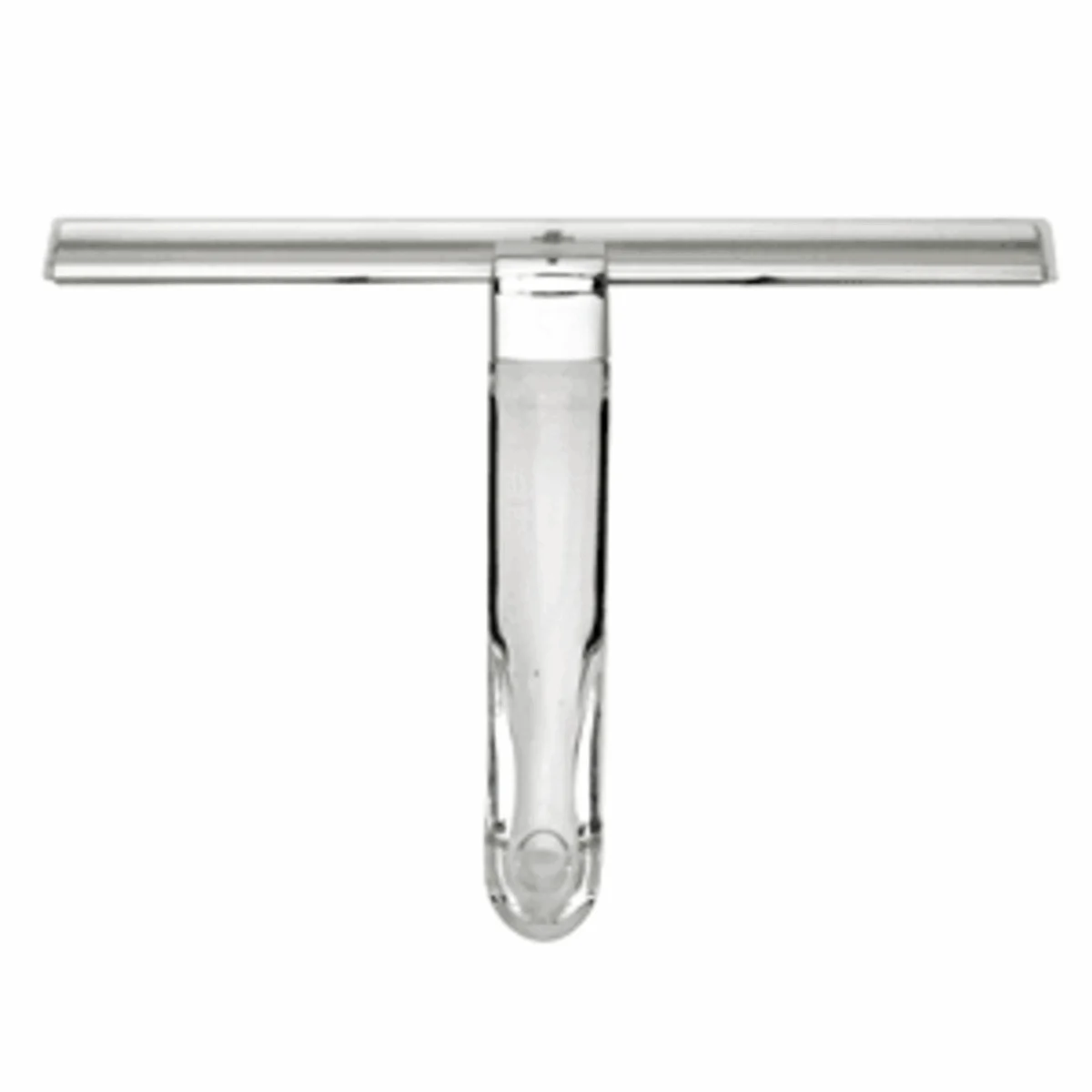
- Keep it up. Squeegee after showers and give the glass a quick weekly pass with IDEAL Conditioner to keep it clear and refresh the shine.
What not to use
- Steel wool, scouring powder or abrasive pads. They can scratch the glass and dull metal hardware.
- Ammonia-based cleaners. They can wear down protective coatings and tend to leave streaks.
- Vinegar and other acidic cleaners. We don't use or recommend acidic cleaners like vinegar, lemon juice or lime and calcium removers on shower glass, hardware or seals. Acids can be hard on metal finishes, natural stone and grout around the glass. Use a product made for glass instead, like Restore in the IDEAL Bath Kit, and keep it up with the IDEAL Conditioner.
When the spots won't come off
If the haze is still there after a proper hard-water treatment, the glass may be etched: the minerals have been sitting long enough to roughen the surface itself. Cleaning can't reverse etching. Treat what will come off, seal the glass, and keep new spots from forming. If you're not sure whether your glass is spotted or etched, see why shower glass looks cloudy.
What we use
We use the IDEAL Bath Kit: Restore lifts the water spots, haze and corrosion, TopCoat seals the glass with a water-repellent protective coating, and Conditioner buffs it to a streak-free shine. One kit treats up to 150 sq ft and includes the pads and microfiber cloth. For the weekly upkeep afterward, the IDEAL Conditioner 2-Pack gives you one bottle for the shower and one for mirrors or the kitchen. Compare both on our Glass Care page, and read how to keep glass shower doors clean once the glass is clear.
Products in this guide
Common questions
What removes hard water spots from shower glass?
A remover made for mineral deposits, such as IDEAL Restore in the IDEAL Bath Kit. Ordinary glass cleaner removes dirt and grime but not the calcium and magnesium that make up hard water spots.
Does vinegar remove hard water stains from glass?
We don't use or recommend vinegar or other acidic cleaners on shower glass, hardware or seals. Acids can be hard on metal finishes, natural stone and grout around the glass. For hard water spots, use a product made for glass, like Restore in the IDEAL Bath Kit, then keep the glass up with IDEAL Conditioner.
How do I stop hard water spots from coming back?
Seal the clean glass with a water-repellent coating like IDEAL TopCoat, squeegee after showers, and give the glass a weekly pass with IDEAL Conditioner.
Why won't the white haze come off my shower door?
If a proper hard-water treatment doesn't clear it, the glass may be etched, meaning the surface itself is roughened. Cleaning can't reverse etching, but sealing the glass helps keep it from getting worse.