
Why Is My New Shower Glass Cloudy?
New shower glass usually looks cloudy for one of three reasons: hard water spots that form fast on bare glass, soap scum, or residue left by the wrong cleaner. All three can usually be cleaned off, and sealing the glass with a water-repellent coating keeps it clear.
1. Hard water spots
This is the most common cause. If your water is hard, every shower leaves drops full of calcium and magnesium. When they dry, the minerals stay on the glass as small white spots that soon blend into a cloudy film. Bare new glass has nothing on it to shed water, so this can show up within weeks. Wipe a hazy area with a damp cloth: if the haze is still there when it dries, it is likely mineral.
2. Soap scum
Soap mixes with body oils and minerals and sticks to the glass as a dull, slightly greasy film, often heaviest where the spray hits. Bar soap and oily body washes make it worse.
3. Cleaner residue
Some cleaners leave a film of their own. Soapy all-purpose sprays and ammonia-based glass cleaners can leave streaks and haze, and abrasive pads can leave fine scratches that read as cloudiness in the light.
A quick way to tell what you're looking at
- White spots or a chalky film, worst near the bottom of the door: most likely hard water minerals.
- A dull, greasy film that smears when you touch it: most likely soap scum.
- Streaks or a hazy sheen right after cleaning: most likely cleaner residue.
- A rough, frosted patch that never changes no matter what you use: possibly etching.
4. Etching (less likely on new glass)
Etching is when minerals have roughened the glass surface itself. It usually takes long-term buildup, so it is unlikely on new glass. Etching won't clean off, which is why it is worth stopping spots early.
How to fix cloudy new shower glass
- Clean off the residue. Rinse the glass and wipe it with a soapless, streak-free cleaner and a microfiber cloth.
- Lift any mineral haze. If the cloudiness stays, use a hard-water remover made for glass, like IDEAL Restore. See how to remove hard water spots.
- Seal the glass. Apply a water-repellent protective coating, like IDEAL TopCoat, in two thin coats so water beads and rolls off.
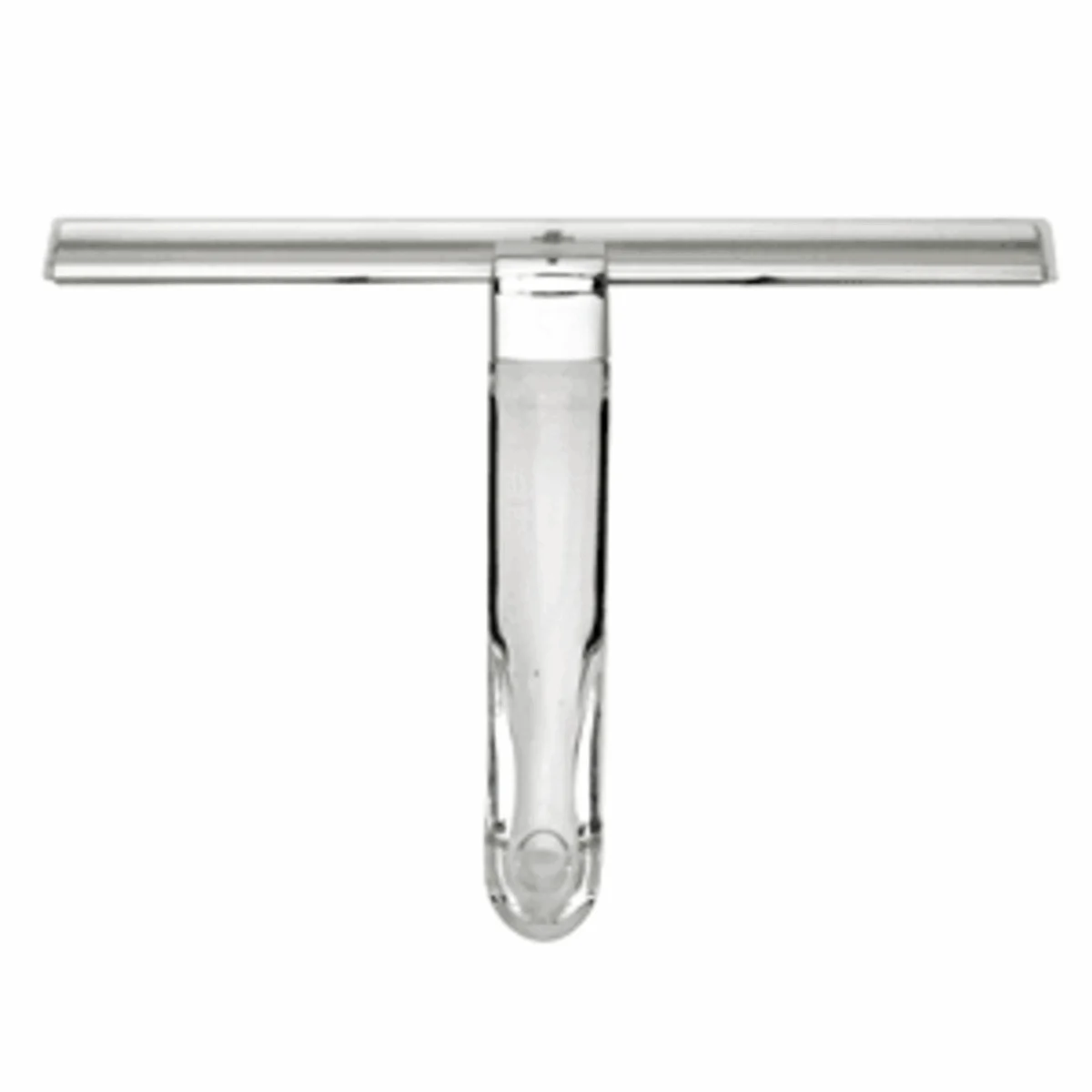
- Keep it up. Squeegee after showers and spray-and-buff weekly.
If your door was just installed, let the silicone cure for the time your installer gives you before the first shower, and keep cleaners off fresh silicone until then.
What we use
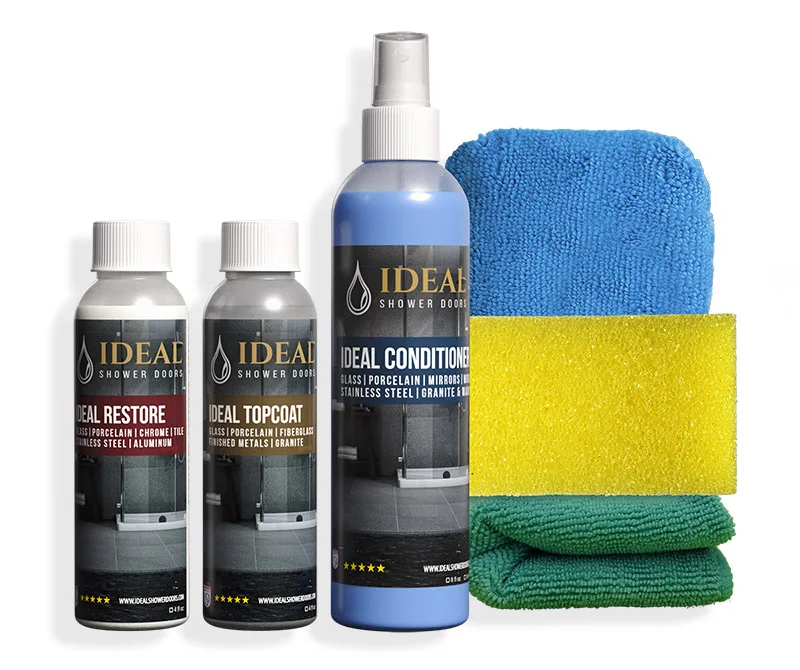
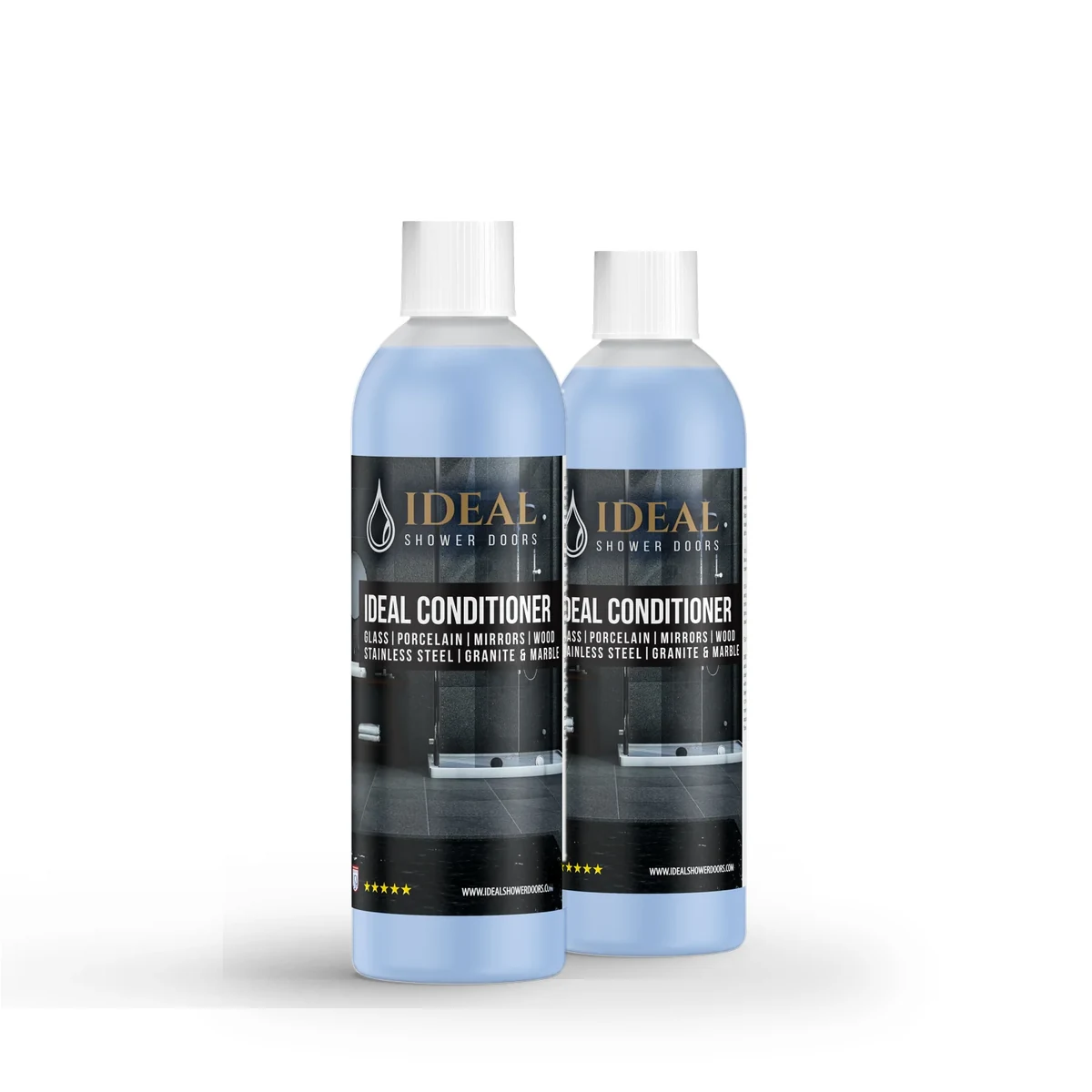
The IDEAL Bath Kit covers all of it: Restore lifts water spots and haze, TopCoat seals the glass, and Conditioner buffs it to a streak-free shine. One kit treats up to 150 sq ft. For weekly upkeep afterward, the IDEAL Conditioner 2-Pack. Shop both on our Glass Care page, and read is shower glass coating worth it if you're deciding whether to seal.
Products in this guide
Common questions
Why does my new glass shower door look cloudy?
Usually hard water spots, which form quickly on bare glass, or soap scum or cleaner residue. Most of it cleans off; sealing the glass helps keep it clear.
How do I make cloudy shower glass clear again?
Clean off residue, then lift mineral haze with a hard-water remover like IDEAL Restore, seal the glass with a coating like IDEAL TopCoat, and keep it up with a weekly spray-and-buff.
Is cloudy shower glass permanent?
Usually not. Mineral spots, soap scum and residue can be removed. Only etching, where the glass surface itself is roughened, is permanent, and it is unlikely on new glass.
How do I keep new shower glass from getting cloudy?
Seal it with a water-repellent coating, squeegee after showers, and give it a weekly spray-and-buff with a product like IDEAL Conditioner.