
Shower Glass Clamp Types: Wall, Glass-to-Glass, 90° & 180°
A shower glass clamp either holds a fixed panel to the wall, floor or ceiling (wall-to-glass) or joins two panels together (glass-to-glass) at 90°, 135° or 180°. To replace one, match four things: the mounting type and angle, your glass thickness, how the glass is cut (a hole, a notch or neither), and the style, square or beveled, so it matches your hinges.
What are the main types of shower glass clamps?
There are two jobs a clamp can do, and every clamp in our glass clamps section does one of them, sometimes both:
- Wall-to-glass (wall mount). Screws to the wall, floor or ceiling and holds the edge of a vertical fixed panel. These are often called U-clamps. They give a frameless look in place of a full-length U-channel. Example: the square hole-in-glass U-clamp (SCU4).
- Glass-to-glass. Joins two panels of glass to each other with no wall involved, at a set angle. Example: the square 90° glass-to-glass clamp (SGC90).
Every clamp here is solid brass and made for tempered glass. They hold fixed glass; the door itself hangs on hinges.
90° vs. 135° vs. 180°: which glass-to-glass clamp do I need?
Go by the angle where the two panels meet:
| Angle | Where you see it |
|---|---|
| 90° | A square corner, like a front panel meeting a return panel. The panels can overlap or be mitered at the corner. |
| 135° | A neo-angle shower, where angled panels meet the door wall. |
| 180° (inline) | Two panels side by side in a straight line, or a fixed transom above a door. |
| 90° to 180°, adjustable | Any angle in between, for showers that aren't square. |
For a 90° corner, SGC90 (square) and BGC90 (beveled) are the standard clamps. For inline panels or a fixed transom, SGC180 and BGC180. For a neo-angle, SGC135 and BGC135. When three panels meet in a "T", there are T-junction clamps like SGC90T. For odd angles, the adjustable clamps (ADJSQ180, ADJBEV180, ADJ180) adjust anywhere from 90° to 180°.
Which clamp styles are there?
- Square. Sharp, squared-off corners. Square edges match square-profile hinges. The square U-clamp is 2" x 2" (51 x 51 mm).
- Beveled. Angled edges that match beveled hinges. Same jobs as the square line: U-clamps, clamps with legs, 90°, 135° and 180°.
- Traditional. The classic clamp look, with a wider thickness range: 5/16" to 1/2" (8 to 12 mm). The traditional U-clamp (UC77) is 1-3/4" x 1-3/4" (44 x 44 mm). CRL notes that 5/16" glass needs an extra clear gasket set with these.
- Sleeve over. Slides over the glass edges and locks with nylon-tipped set screws, so the glass needs no holes or notches. They hold the panels while the silicone in the joint cures and take the shear load after that; the silicone is what seals the joint and holds the panels together. CRL warns they don't replace a header or support bar. Example: the 90° sleeve over clamp. The wall-mount versions come left hand and right hand, viewed from outside the shower.
- Oversized and tall base. The oversized U-clamp (UC79) is bigger, so the hole can sit one and a half times the glass thickness from the edge, as some tempering plants require for 1/2" (12 mm) glass. The tall base clamp (CMC1) has a 1" (25 mm) base for a bigger gap, mainly for ceilings, and fits 3/8" glass only.
- No-drill. Grip uncut glass with two nylon-tipped set screws: NDC4 for 5/16" to 3/8", NDC12 for 1/2", NDC6 for 1/4". Use silicone along the glass edges too, and never hang a door off a panel held only by these.
- Zero clamps. The mounting hardware is hidden under a cover and installs from outside the shower. The Zero Clamp mounts a panel to the wall, or two of them join panels glass to glass; the Zero 90° does a 90° corner or a wall mount. The glass needs a hole.
- Movable transom. Let a transom above the door pivot so steam can escape. SGC188 pivots off an inline fixed panel and SGC186 off the wall; both handle a transom up to 16" x 30" (406 x 762 mm) and should be centered on it. The fixed panel needs a 3/4" hole and the transom a notch. Ceiling-mount versions like the Geneva 3-point clamp stop at 45° in, closed and 45° out.
Square or beveled: does it matter?
For fit, the two lines are close cousins: both take 3/8" to 1/2" (10 to 12 mm) glass, and the hole-in-glass U-clamps (SCU4 square, BCU4 beveled) both call for a 3/4" (19 mm) hole and leave a 3/16" (5 mm) gap to the wall. For looks, it matters a lot. Our installers match the clamps to the hinges on the same shower: square clamps with square hinges, beveled with beveled. Mixing them is the first thing your eye catches on a frameless enclosure. If you're replacing one clamp, look at its corners: crisp 90° edges mean square; angled faces around the edge mean beveled.
Does my glass need a hole for a clamp?
Most clamps do. Square and beveled U-clamps and glass-to-glass clamps need a 3/4" (19 mm) hole in each panel; traditional clamps take a 5/8" or 3/4" (16 or 19 mm) hole. Notch-in-glass clamps like SGCU1 need a notch cut into the edge instead, and they sit closer to the wall: a 1/16" (2 mm) gap. Holes and notches are cut before the glass is tempered, so you can't add one to an installed panel. If your glass has neither, look at the sleeve over and no-drill clamps.
How do I measure for a replacement clamp?
- Name the mounting type. Is the clamp screwed to a wall, floor or ceiling, or does it join two pieces of glass? If it joins glass, note the angle: a square corner is 90°, a neo-angle corner is 135°, and panels in a straight line (or a transom over a door) are 180°.
- Measure the glass thickness. Measure a bare edge of the glass with a tape measure. Most clamps fit 3/8" to 1/2" (10 to 12 mm) glass; some fit 5/16" to 1/2" (8 to 12 mm), and a few are made only for 1/4" (6 mm).
- Check how the glass is cut. Look at the glass at the clamp. A hole drilled through the panel, a notch cut into its edge, or plain uncut glass each need a different clamp. If there is a hole, measure across it: CRL clamps call for a 5/8" or 3/4" (16 or 19 mm) hole. Also measure from the edge of the glass to the closest edge of the hole.
- Measure the old clamp. Measure its width and height, the length of the leg on wall clamps, and the gap between the glass and the wall. The product pages list each clamp's size and wall gap, so you can find one that covers the same footprint.
- Match the style and finish. Square clamps have sharp, squared-off corners; beveled clamps have angled edges. Pick the style that matches your hinges, then the finish.
Our full glass thickness guide shows the tape-measure method step by step. One safety note from the field: a fixed panel can lean or fall when its clamps are loose. Support the glass before you take a clamp off.
How do I pick the right wall clamp?
- Gap to the wall. Hole-in-glass square and beveled U-clamps leave 3/16" (5 mm); notch clamps and the large-leg clamps (SGC039, BGC039) leave 1/16" (2 mm). Traditional clamps leave 5/32" to 3/16" (4 to 5 mm). The gap is sealed with clear silicone.
- Leg or no leg. Clamps with a 90° leg have a stronger mounting surface. SGC037 has a 1-3/8" (35 mm) leg; SGC039 has a 2" (51 mm) leg that covers more tile.
- Footprint. When replacing, choose a clamp at least as big as the old one, so old screw holes and the clean spot under it stay covered.
- Panel at the outside edge of the wall. That takes a "Y" clamp like SGC182 or BGC182.
- An odd angle to the wall. Adjustable wall clamps like ADJSQ037 hold a panel at a non-standard angle.
Which glass thickness do clamps fit?
Most square and beveled clamps, and the Zero clamps, fit 3/8" to 1/2" (10 to 12 mm) glass. Traditional, sleeve over and adjustable clamps fit 5/16" to 1/2" (8 to 12 mm). For 1/4" (6 mm) glass there are dedicated clamps: the junior U-clamp (UC66), the junior 90° clamp and NDC6. Each product page lists its exact range under specs.
Ready to shop? Browse all shower glass clamps by style, in every finish CRL makes.
Products in this guide
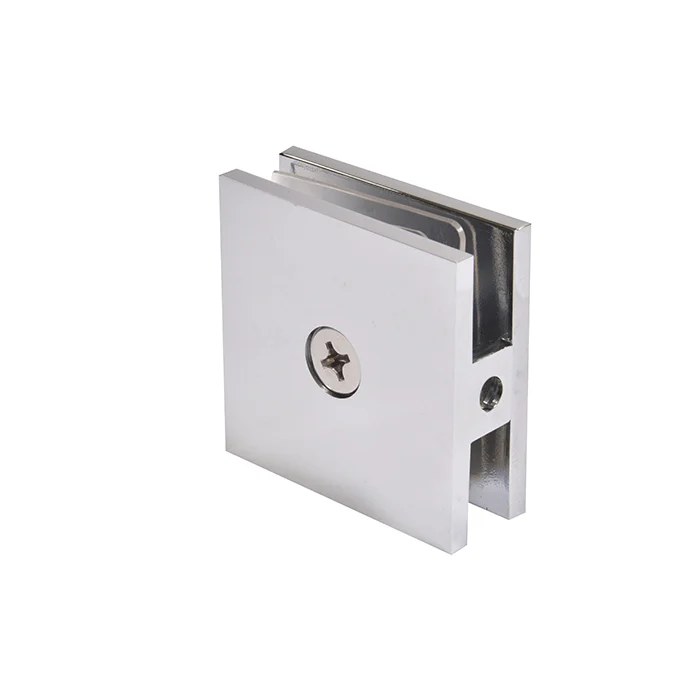
Square Hole-in-Glass Fixed Panel U-Clamp
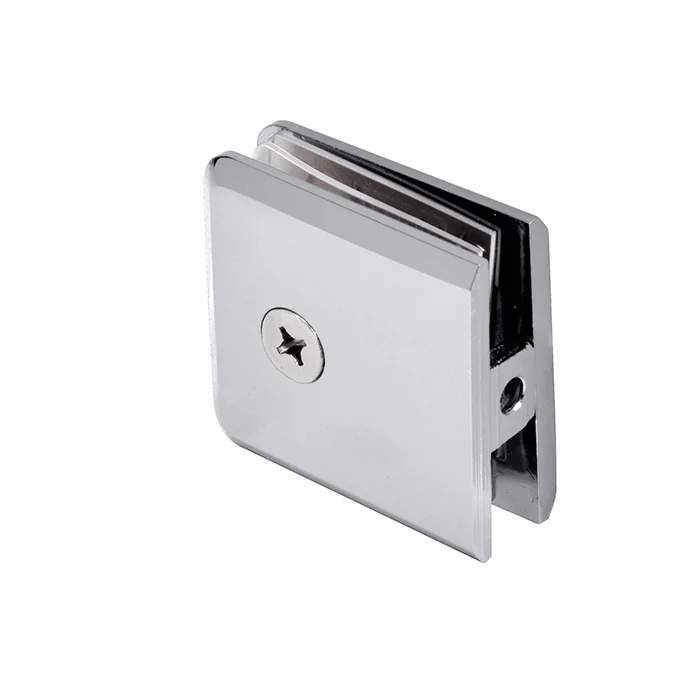
Beveled Hole-in-Glass Fixed Panel U-Clamp
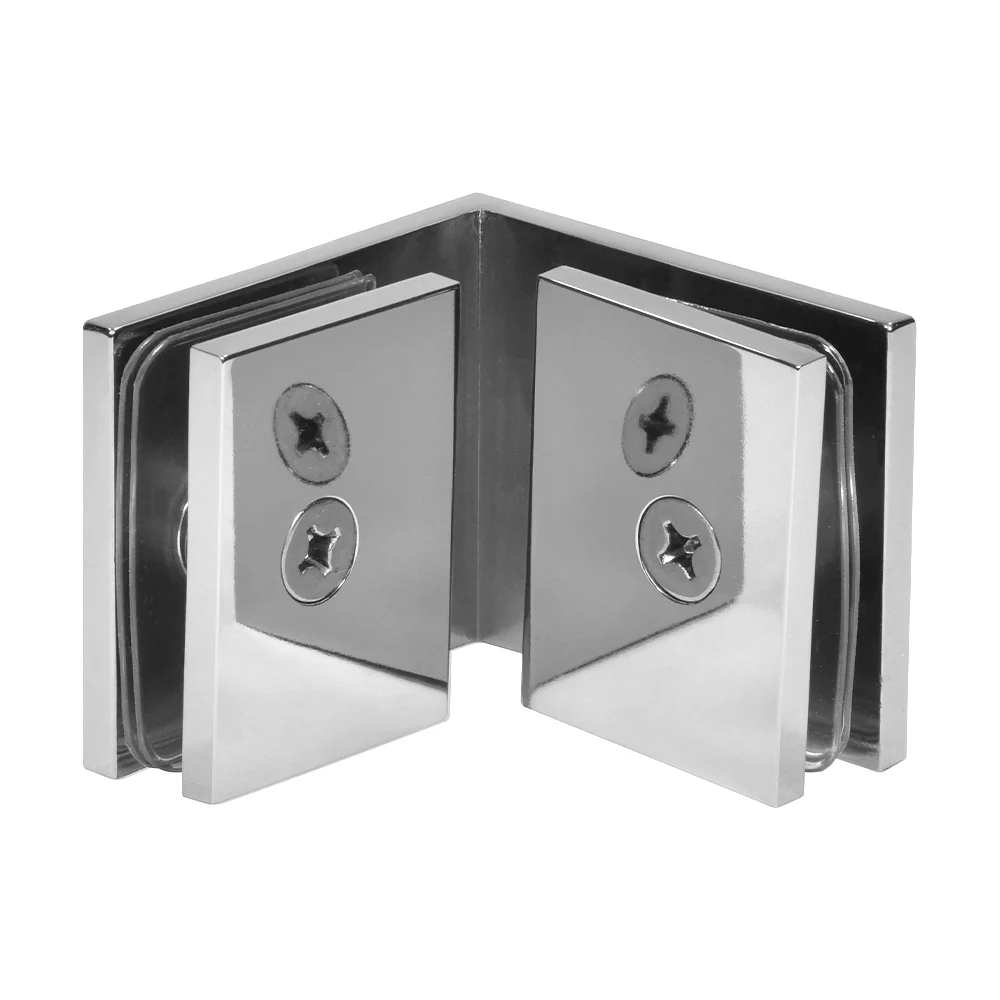
Square 90° Glass-to-Glass Clamp
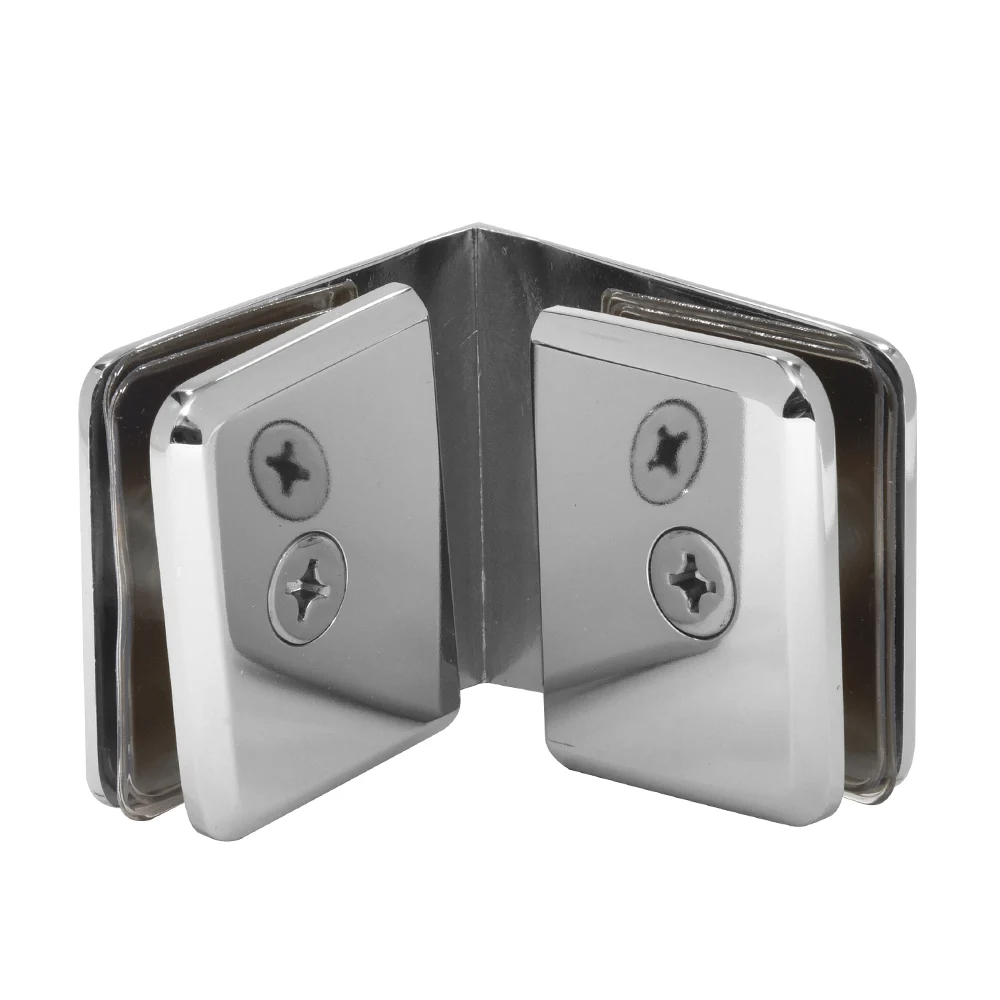
Beveled 90° Glass-to-Glass Clamp
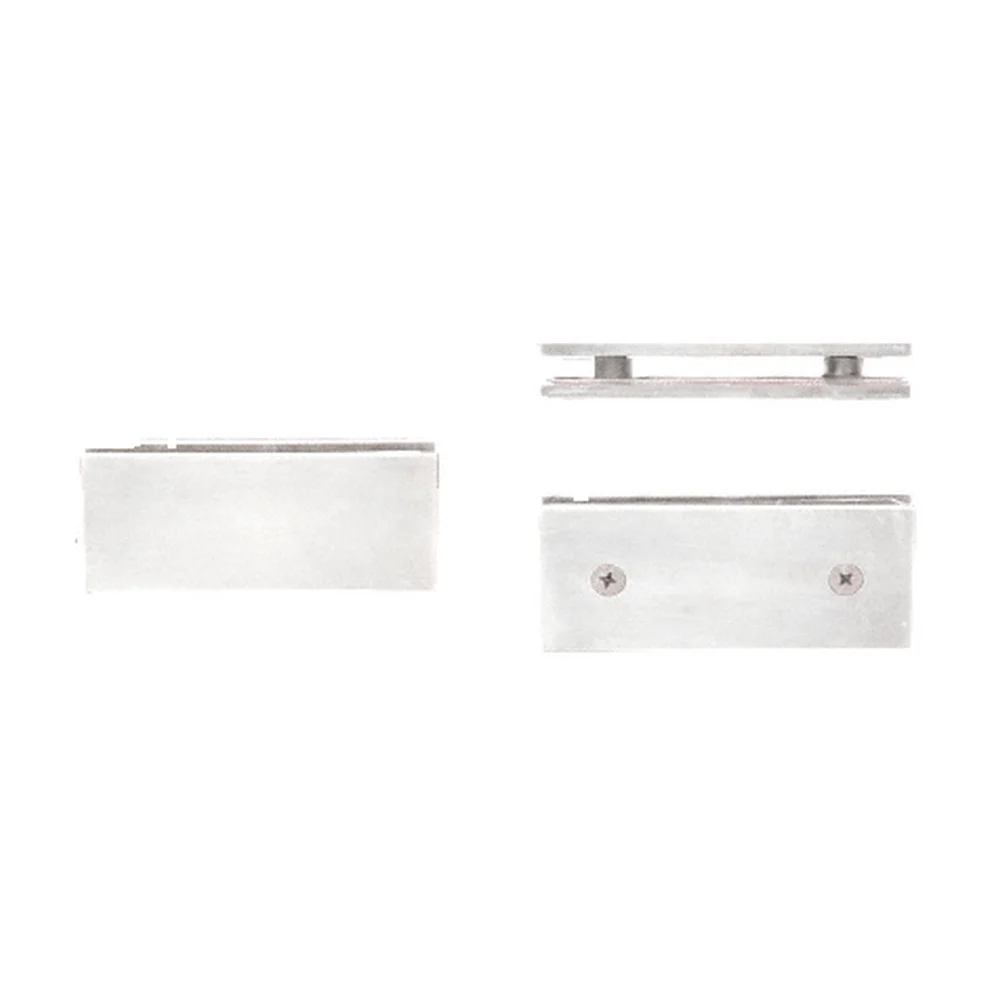
Square 180° Glass-to-Glass Clamp
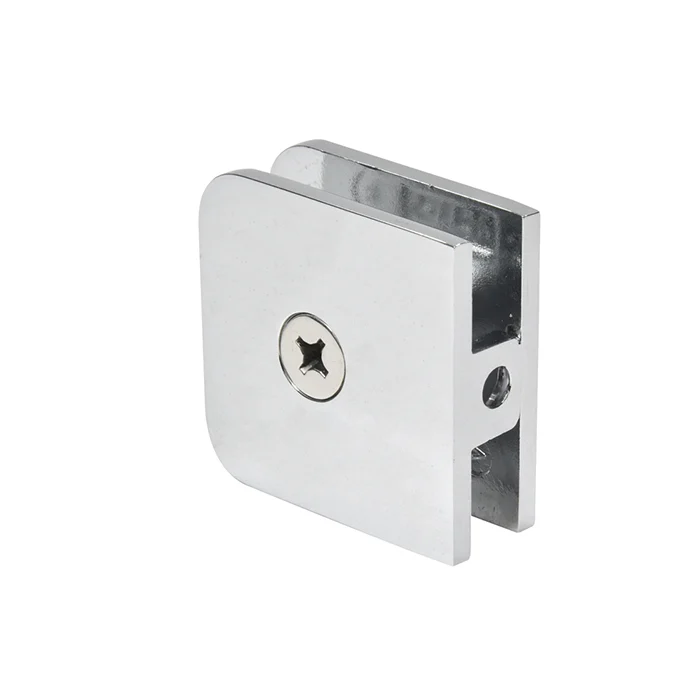
Traditional Fixed Panel U-Clamp
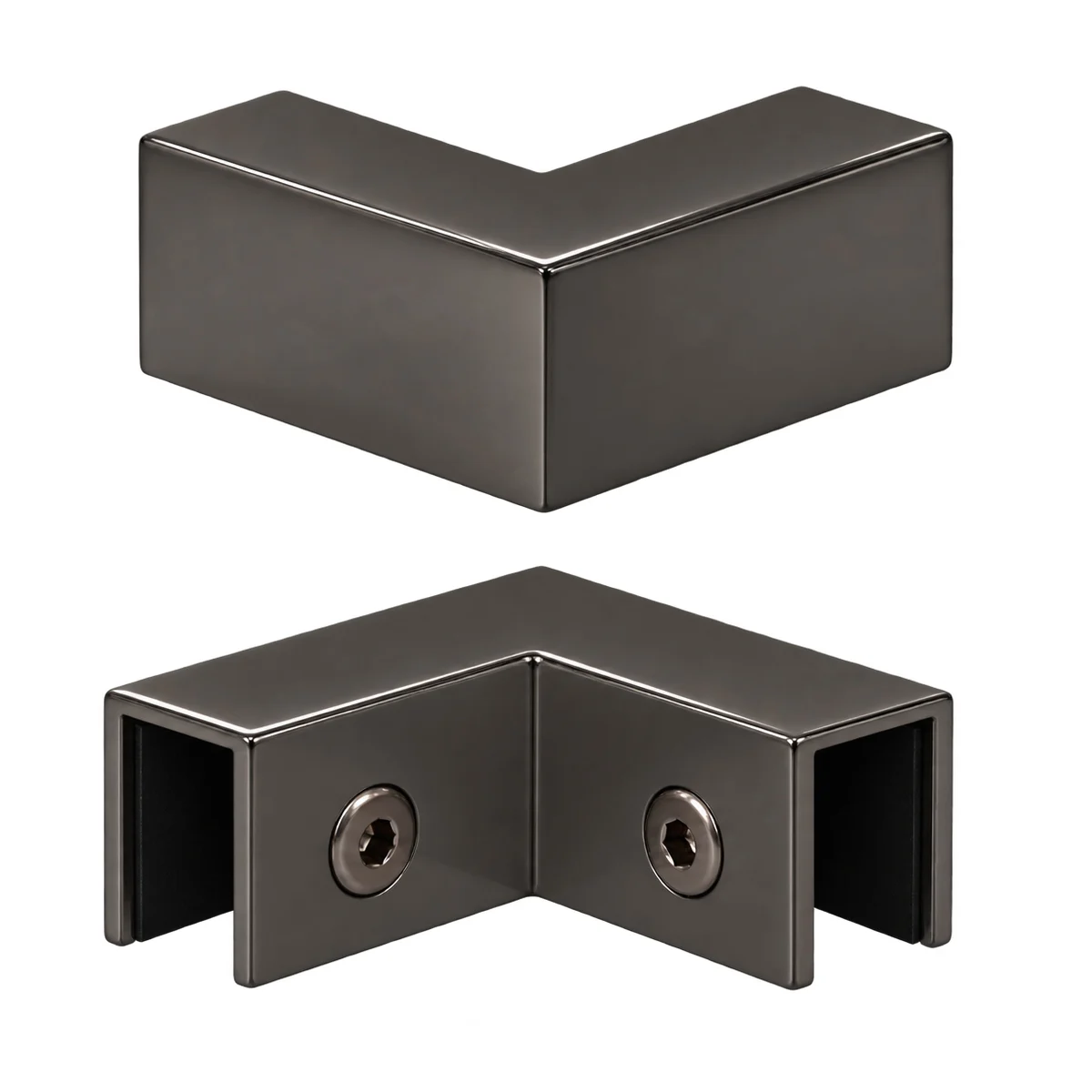
90° "Sleeve Over" Glass Clamp
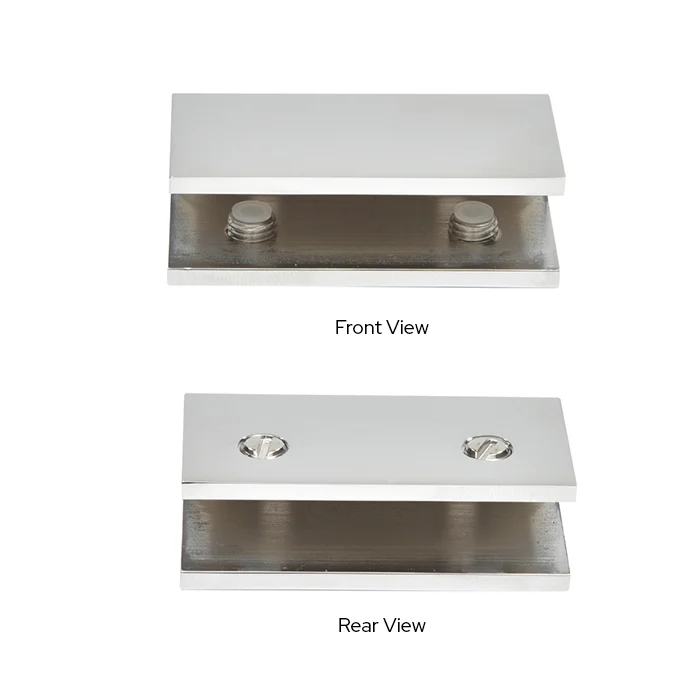
No-Drill Fixed Panel Glass Clamp
Common questions
What is the difference between a wall clamp and a glass-to-glass clamp?
A wall clamp (U-clamp) screws to the wall, floor or ceiling and holds the edge of a fixed glass panel. A glass-to-glass clamp joins two panels to each other at a set angle, such as 90°, 135° or 180°.
Do I need a 90° or 180° glass clamp?
Use 90° where two panels meet at a square corner. Use 180° where two panels sit side by side in a straight line, or for a fixed transom above a door. Neo-angle corners take 135°.
What size hole does a shower glass clamp need?
CRL square and beveled clamps need a 3/4" (19 mm) hole in each panel. Traditional clamps take a 5/8" or 3/4" (16 or 19 mm) hole. Notch-style clamps need a notch in the glass edge instead, and sleeve over and no-drill clamps need no hole at all.
Can I replace a square clamp with a beveled one?
For fit, the square and beveled hole-in-glass U-clamps both take a 3/4" hole and leave a 3/16" gap to the wall. For looks, match the clamps to your hinges: square with square, beveled with beveled.
Can a no-drill clamp hold a panel that a door hangs on?
No. CRL says never to hang a door off a panel held only by no-drill clamps. Use them on panels that carry no door, with silicone along the glass edges.